Import jQuery

Showing posts with label feasts of the lord. Show all posts

A Messianic perspective on the 4 cups of Passover

Shalom fine Kineti reader, and chag sameach. Here are some notes I jotted tonight for the significance of the 4 cups of Passover for Messianic believers. I hope you enjoy!

-Judah
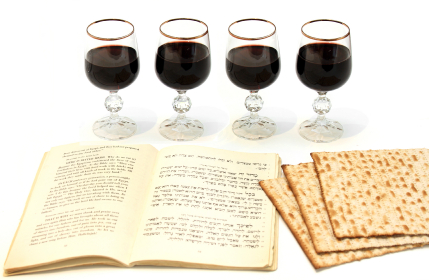
imageWhy do we drink the 4 cups of Passover?

The Jewish people have several traditions around the 4 cups. One prominent tradition is that the 4 cups correspond to the 4 “I will…” statements of Exodus 6:

I am the Lord, and I will bring you out from under the burdens of the Egyptians, and I will save you from slavery to them, and I will redeem you with an outstretched arm and with great acts of judgment.  I will take you to be my people…

We take these 4 cups remembering the works of God, aspects of his saving Israel, facets of his salvation:

  1. “I will bring you out” – sanctification
  2. “I will save you” – deliverance
  3. “I will redeem you” – redemption
  4. “I will take you as My people” – restoration

We also take these 4 cups in remembrance of Messiah. At Passover, Messiah commands us to “do this in remembrance of Me” – but what are we remembering about Messiah?

  1. Messiah calls us to be holy – sanctification – by living the life of a disciple.
  2. Messiah has saved us from sin – deliverance – through the shedding of his blood.
  3. Messiah has redeemed mankind, as the prophet Isaiah spoke “the righteous one, my servant, shall make many accounted righteous, because he poured out his soul to death and bore the sin of many.” Through Messiah pouring out his blood, God redeemed from every nation a people for himself.
  4. The coming Messianic Era, the Kingdom of Heaven, is the restoration of the world, in which there is only one nation – the Kingdom of God – with one king, the Messiah.

Cup 1: Sanctification

“I will take you out…”

With this first cup we remember God pulling Israel out of the nations and setting them apart from the world.

We remember how God took a bunch of nobody slaves and called them to be distinct from the nation they were living in. He took people that were suffering and dissolving and disappearing, he listened to their cries for help, and responded to their cries, “I will take you out!”

This separate-ness – called sanctification – is why God blessed Israel but judged Egypt. This separate-ness is why God sent plagues on idolaters, but peace and safety to His people. This separateness is why God killed the firstborn of Egypt, but gave life and deliverance to his people Israel.

When we drink this cup of sanctification, we remember the Messiah, who called us to the difficult and life-long path of a disciple: separate from the world, distinct from sinful people, a higher calling of discipline and obedience and service to God.

We remember that Messiah has taken us out of the world, as it’s written, “Do not love the world, or the things of the world. If anyone loves the world, the love of the Father is not in him. For all that is in the world, the lusts of the flesh and the lusts of the eyes are not of the Father, but of the world. And the world and all of these lusts are passing away. But the one that does the will of God abides forever and ever.”

God has called each person in this room to live a holy life. Not one that is so like the world, that we’re indistinguishable from unbelievers. But a life marked by holiness, characterized by shalom, distinguished by obedience to God’s commandments, filled up with the fruit of the Spirit and producing good works for God and the Messiah who sanctifies us.

Cup 2: Deliverance

“I will save you…”

Have you ever experienced a difficult time in your life? Maybe you’re struggling with depression, battling addictions, barely surviving a fight-filled marriage?

In such times, we call out to God for help. We’re at the end of what we can humanely do. We don’t know how else to fix the situation. “God, help me, I don’t know what else to do!”

This is what the people of Israel did in Egypt. Being worked to death in a burning desert for hundreds of years, people were losing hope. At that point, all of God’s promises must have seemed ridiculous. That old promise that God would make them into a great nation must have seemed entirely laughable, a fairy tales you tell to children, but not a tangible reality.

Then, God intervened. Then, God performed a divine reversal. Instead of a forgotten people dying in a desert, God puts on a show of divine power, his right arm bared for everyone to see, miracles worked one after another, judgment brought on the captors, release and favor on the captives. This was the salvation of Israel that was to be remembered for generations to come, this was the deliverance of God’s people that became etched throughout the Scriptures, ingrained even in the 10 commandments which begin, “I am the Lord your God who brought you out of Egypt, and delivered you from the land of slavery.”

Had God not delivered them at that time, there would have been no Exodus from Egypt, no commandments given to Israel, no land of Israel, no prophets of Israel, no books of the Bible, no kings of Israel, no King David, and if not David, then no son of David, the Messiah, and if no Messiah, no disciples, no disciples, and we wouldn’t be here today.

As we drink this cup of deliverance, let’s remember that God came through, he didn’t disappoint, and made good on his promise to deliver Israel. Let’s remember that God sent the Messiah, his own Son, who delivers us from sin; we no longer need to be slaves to sin, because we have repentance leading to forgiveness of sin in Yeshua’s name. We will overcome even the difficult circumstances because God will deliver us, as Messiah encouraged us saying, “Have no fear, have no fear, I have overcome the world!”

Let’s remember and trust and believe that every man who puts his trust in the Lord will not be disappointed, but will see in his own life God’s complete and total deliverance.

Cup 3: Redemption

“I will redeem you…”

The idea of redemption is foreign to us in the 21st century. We might redeem a coupon code, or talk about a person’s sole redeeming quality, but we otherwise don’t deal in redemption.

To redeem something is to regain it in exchange for payment. To buy back something. To repurchase or win back something.

God is in the redemption business. God is called the Redeemer of Israel repeatedly in the Torah and in the psalms and in the in the prophets. In this 3rd Passover cup, the cup of redemption, we remember that God redeemed Israel from slavery, reclaiming his people for himself through what the Scriptures call an outstretched arm – God’s power on display through repeated miracles for Israel and plagues against Egypt.”

This 3rd cup is the cup that our Master Yeshua also said, “This is the cup of the b’rit hachadasha (new covenant, new agreement, new deal), ratified by my blood, which is poured out for you.”

This new covenant, this new deal was an agreement in which God agreed that everyone who calls on the name of the Lord will be saved, spared from sin and death and judgment.

Yeshua said this 3rd cup, the cup of redemption, is the cup of the new covenant, the cup of his blood poured out for humanity.

His blood being poured out was what made this new deal possible. Isaiah spoke in advance of Messiah’s coming, foretelling that God’s righteous servant – the Messiah – will justify many people before God. This new deal was made possible by God laying on Messiah the guilt of humanity, that by his being beaten, bruised, and whipped, and speared, and nailed to a tree, Messiah’s shed blood will redeem mankind. This is the blood of the new covenant, the cup of redemption that we are about to drink.

The book of Hebrews puts it this way: the priests in the Temple offering sacrifices and appearing before God’s presence is an earthly shadow of a heavenly reality: Messiah shedding his perfect blood, cleaning us of our sin and appearing before God on our behalf. Through Messiah’s shed blood, he took on himself the sins of many, becoming God’s Salvation and God’s Redemption.

And because of this Messiah, we are all here today. Because of the merit of Messiah’s life and the pouring out of his blood, God has purchased from all nations a people for himself, a people who once were not a people. We, the billions of believers who call on the name of the God of Israel, have been redeemed by God, purchased through the precious blood of his own son, the spotless Passover lamb, to him be the glory forever!

Cup 4: Restoration

“I will take you as My own people…”

The hope we have as disciples of Yeshua is the hope promised in the Scriptures: God is restoring all things to their pristine state, turning evil on its head, rewarding the righteous, setting things straight.

Are you distraught at how wicked and sinful people are today? Don’t worry, God will bring every evil act of men into judgment. Do you see confusion among secular people, in the media, and even in the church? God promises he will seal up the deceiver, cast him in the lake of fire, and Satan will no longer be able to deceive the nations. Are you ill? God has promised that when the Kingdom of Heaven arrives, disease will be taken away. Are you suffering? God will wipe every tear from your eye, remove pain and suffering. Are you old and frail? God will raise you up in the last day, give you a new immortal body, and you will reign with him from Jerusalem.

In this final cup of Passover, the cup of Restoration, we remember that God kept his promise to restore Israel. It was seemingly impossible – the sons of Abraham to whom God has promised a nation and a great people had been reduced to a lowly group of slaves subject to a harsh master, a disorganized and bickering people dying through forced labor in the desert.

God came through and restored the people to the glory he promised them. Abraham’s seed, the Jewish people, saw God at work, restoring his people to their honored state as kings and priests of God, making a reality his promise of a great nation through whom all the families of the earth would be blessed. That nation and that people are still alive today as a testament to God’s faithfulness.

It’s important we remember this restoration! In the 1800s, even many of the Jewish people forgot that God is serious about restoration. After nearly 2000 years of being a disorganized, disunited people outside of the land God promised, one of the major branches of Judaism decided God wouldn’t restore the land after all; the Jewish people would never return to the land of Israel, never again to be a nation. That branch of Judaism decided to remove from the siddur all prayers mentioning Israel, Zion, Jerusalem.

The Christian world, too, discarded God’s promise of restoration, with one Vatican official writing in the early 1920s that God has “forever cursed the Jewish people to be nomads without a homeland.”

But, to the surprise of even the religious, God didn’t forget his promise of restoration. On May 14th of 1948, the nation of Israel was reborn, the Jewish exile ended, the land of Israel brought forth fruit again, and the Hebrew language was restored.

God is in the business of restoration, even in the modern age, yes, even in this generation.

In the last 20 years, we have seen a renaissance of disciples of Yeshua who love the Torah, look at God’s commandments as holy and good and righteous. That you are here today, celebrating Passover on the other side of the planet from where Messiah lived, 2000 years after his day – this too is a testament to God at work, God restoring what once was and what will soon be in the Messianic Era.

This final cup of Passover Yeshua our master did not drink. He said, “I will not drink of this cup until it finds its fullness in the Kingdom of Heaven”, that day when God wipes every tear from our eyes, when he takes away suffering and pain, causes death itself to die, resurrects his loved ones, all of his holy, faithful children reigning with him, bringing to earth a new earth, a new heaven and a new Jerusalem. Then Messiah’s name Immanuel – God with us – will have its full meaning when God dwells with mankind and restores creation itself, making all things new.

Chag sameach!

A summary of Shavuot mitzvot in the Hebrew Bible

D96430_3

Sometimes I need a little motivation to move my various God-related projects forward. So, thank you, Lord, for Shavuot, which takes place this week. Just the motivation I need. Smile

Shavuot (“Pentecost” in English-ified Greek) is one of the 7 Biblical holy days, still observed by Judaism to this day. Or at least, Judaism observes the commandments that don’t require the Jerusalem Temple to be rebuilt. More on that in a moment.

Traditionally, Judaism sees Shavuot as the time when the Torah was given on Mt. Sinai; the giving of Israel’s constitution and the foundation for all Judeo-Christian societies that followed.

It also plays an important role in the New Testament, where during Shavuot the early believers were in Jerusalem for this feast when God’s spirit fell on the disciples and the early community of believers grew by the thousands.

Christians consider it the birth of the Church.

Despite Shavuot playing a crucial role in early Christianity, Christians don’t actually celebrate it; it seems many Christians look at Pentecost as a one-time event, rather than the recurring, yearly holy day the Scriptures call for.

(Odder still, Pentecostal Christians don’t actually celebrate Pentecost! So I guess we cannot call them Shavuotals, as Dry Bones points out. Smile)

The Messianic world absorbs and appreciates both old and new sides of Shavuot. As this Messianic sees it, old and new complement each other: the Torah given to ancient Israel, and God’s spirit given to his people in Jerusalem. The first a constitution for God’s people, the latter a guide and comfort for God’s people. Beautiful symmetry in that.

Messianics have much to be grateful for! Smile 

(Thank you, Lord, for the giving of your Torah and your Spirit, which persists to this day among those who love you!)

My friend and Messianic scholar J.K. McKee has outlined the summary of Shavuot traditions.

The challenge when considering Shavuot today, either as Messianic Believers, or simply as a member of the Jewish community, is that much of it is focused around being a harvest festival with animal sacrifices. Without a doubt, Shavuot is intended to be a time when we are to go before God and rejoice. Simply being alive and healthy are adequate reasons enough for us to go before the Lord. But, much of this was intended to be done in Jerusalem at the Temple. How are we to celebrate Shavuot today?

Indeed, examining the 4 Shavuot commandments in the Torah shows a Temple-centeredness.

Appear in Jerusalem for Shavuot
(…and Passover and Sukkot!)

image

“Three times a year all your men are to appear in the presence of Adonai your God in the place which he will choose — at the festival of matzah, at the festival of Shavuot and at the festival of Sukkot.

- Deuteronomy 16:16

This one really is Temple-centric! The other week I showed that the Torah demands an interpretation, citing this verse as a great example: what does it mean to “appear before the presence of the Lord”? Where is “the place that God will choose”?

From the context of broader Scripture and from Judaic writings, we know that the place God chose is Jerusalem (II Chronicles 33, to cite one of many examples), and to “appear before the Lord” meant to go up to the Temple in Jerusalem and bring an offering.

McKee notes that we also have extra-biblical confirmation that this is indeed how ancient Israel kept Shavuot:

“Those [who come] from nearby bring figs and grapes, but those [who come] from afar bring dried figs and raisins. And an ox walks before them, its horns overlaid with gold, and a wreath of olive [leaves] on its head. A flutist plays before them until they arrive near Jerusalem. [Once] they arrived near Jerusalem, they sent [a messenger] ahead of them [to announce their arrival], and they decorated their firstfruits. The high officers, chiefs, and treasurer [of the Temple] come out to meet them. According to the rank of the entrants, they would [determine which of these officials would] go out. And all the craftsmen of Jerusalem stand before them and greet them, [saying], ‘Brothers, men of such and such a place, you have come in peace’”

Mishna Bikkurim 3:3.

So the first Shavuot commandment is one that really can’t be carried out today. Yes, we could go to Jerusalem, but the Temple is not yet rebuilt. We can’t “appear before  the Lord”, at least not in the same way the Torah intends.

Celebrate on Shavuot

(…and on Passover and Sukkot)

Maimonides extracts an additional commandment from the text of Exodus 23:

image

Three times a year you are to celebrate a festival to Me….Unleavened Bread…Shavuot…and Sukkot.

Exodus 23

This is one we can keep today – celebrate before the Lord! Shavuot was a time of giving the best of one’s harvest as an offering to God at the Temple.

Without the Temple, we can at least celebrate before God and give thanks with praises and prayer, the fruit of our lips.

Rest on Shavuot
…and…

Do not work on Shavuot

image

On that day you are to proclaim a holy gathering and do no regular work. This is to be a lasting ordinance for all generations to come, wherever you live.

Lev. 23:21

Following his usual mode of interpretation, Maimonides derives 2 commandments from the “do no regular work” source text: rest on Shavuot, and do no prohibited labor on Shavuot.

Interestingly, Maimonides does not list “proclaim a holy gathering” as a commandment. I’m guessing he figured it is already a commandment in the form of “appear before the Lord at the place he chooses”, the commandment discussed above.

God makes a point to say Shavuot is both eternal and global. This has implications for this generation; many of us live outside Israel. Yet God says, “wherever you live”. Still others say our religion is enlightened and the old Law obsolete or otherwise no longer binding. Yet God says, “this is a lasting ordinance for all generations to come.”

Bring additional Shavuot offerings

image

On the day of firstfruits, when you present to the Lord an offering of new grain during the Festival of  Weeks, hold a sacred assembly and do no regular work. Present a burnt offering of two young  bulls, one ram and seven male lambs a year old as an aroma pleasing to the Lord. With each bull there is to be a grain offering of three-tenths of an ephah of the finest flour mixed with oil; with the ram, two-tenths; and with each of the seven lambs, one-tenth. Include one male goat to make atonement for you. Offer these together with their drink offerings, in addition to the regular burnt offering and its grain offering. Be sure the animals are without defect.

Numbers 28:26-31

This one, I feel, Maimonides does not do proper justice. As with many of the sacrifice commandments, he skims over all details, lumping them all into the catch-all “bring additional offerings on Shavuot.”

Looking at the text, we’ve got these Shavuot harvest offerings:

  • 2 young bulls
  • 1 ram
  • 7 male lambs
  • 10 grain offerings of fine mixed flour
  • 1 male goat
  • Drink offerings to coincide with all the offerings

All the animals offered were without blemish, and this was in addition to the daily sacrifices.

These would be sacrifices offered by the priests in the Temple, as I understand it, and not by each person. However, each person did bring grain offerings from the harvest, as we read earlier in the Mishna.

Bring 2 loaves as a wave offering

image

From wherever you live, bring two loaves made of two-tenths of an ephah of the finest flour, baked with yeast, as a wave offering of firstfruits to the Lord. Present with this bread seven male lambs, each a year old and without defect, one young bull and two rams. They will be a burnt offering to the Lord, together with their grain offerings and drink offerings—a food offering, an aroma pleasing to the Lord.

-Leviticus 23:17

In addition to the special Shavuot offerings of grain, bulls, lambs, and drink offerings, Maimonides adds another commandment for the two loaves as a wave offering to God, offered alongside the animal offerings.

Why two loaves?

Thinking out loud here, there may be a link to the previous feast, Passover. At Passover, we eat unleavened bread for 7 days. After which, we count the omer up to the 50th day, which is Shavuot. Enter the two leaven loaves, signifying a restoration. A harvest.

Messiah’s arrival may inform our understand here. The two loaves may symbolize the giving of the Torah and the Spirit. Both are waved before God as a pleasing offering.

A joyful chag to you, fine Kineti reader! And a rest-filled shabbat.

Chag Sukkot Sameach!

As I sit inside your sukkah of love
I look to the stars above
A star will rise out of Jacob
Ruler of Yisrael

Chag haSukkot hazeh z’man simchateinu, fine Kineti readers!

All nations will flow to Jerusalem, one Sukkot day in the future, to kneel before the King, to worship the Lord in Zion.

Until then, happy Sukkot!

Yom Kippur: atonement for Yeshua’s disciples

"There are many reasons in our modern world not to take Yom Kippur seriously. The popular religious spirit urges us to believe forgiveness is easy and cheaply received so that penitence and uttering confessions with the lips are passé. But God says of this day, 'On this day shall atonement be made for you, to cleanse you; from all your sins you shall be clean before the Lord.'” (Lev 16:30).

Yom Kippur, the day of atonement, The Fast, begins this week.

How can we, disciples of Yeshua, keep Yom Kippur? God gives us these commands for Yom Kippur:

  1. Don't work: "You shall do no work at all. This is to be a lasting ordinance for the generations to come, wherever you live." Lev 23:31
  2. Deny yourself: "This is to be an eternal commandment: On the tenth day of the seventh month you must deny yourselves—whether native-born or an foreigner living among you."
  3. Have a holy meeting: "The tenth day of this seventh month is Yom-Kippur; you are to have a holy convocation, you are to deny yourselves, and you are to bring an offering made by fire to Adonai."
  4. Bring additional offerings: "Present as an aroma pleasing to the LORD a burnt offering of one young bull, one ram and seven male lambs a year old, all without defect. With the bull prepare a grain offering of three-tenths of an ephah of fine flour mixed with oil; with the ram, two-tenths; and with each of the seven lambs, one-tenth. Include one male goat as a sin offering, in addition to the sin offering for atonement and the regular burnt offering with its grain offering, and their drink offerings."

What does "deny yourself" mean? Messianic scholar J.K. McKee explains,

"Surveying Jewish history, it is very easy to see that fasting—abstaining from food—was most definitely the traditional interpretation and application of what it means for one to afflict himself or herself on Yom Kippur by the time of Yeshua. A direct reference to Yom Kippur appears in Acts 27:9, which says that on Paul’s way to Rome “considerable time had passed and the voyage was now dangerous, since even the fast was already over, Paul began to admonish them.” Here “the fast” (Grk. tēn nēsteian, th .n nhstei,an) is undoubtedly Yom Kippur. Commentators are almost unanimously agreed that this is Yom Kippur. [Christian theologian and scholar] F.F. Bruce explains, “By the ‘Fast’ [Luke] means, of course, the Great Day of Atonement, which falls on Tishri 10.”

Perhaps a bigger question on the minds of many Christians is, do disciples of Yeshua have any business keeping Yom Kippur, fasting, and repenting? After all, Yeshua is our atonement, and in his name is the forgiveness of sins.

My conviction is this: Yeshua did not take away from God's commandments (Matthew 5:17-21), and we know from the gospels that Yeshua celebrated the feasts of the Lord. But what about Yom Kippur - does Messiah's sacrifice cancel God's day of atonement? Consider God's commandment: "This is to be an eternal commandment, wherever you live, whether native or foreigner: you must deny yourselves."

I believe that too much of Messiah faith today is focused on cheap, easy forgiveness. We flippantly approach God, we do not understand how grievous our sin is to Him, it's too easy to say, "Messiah took my sin, so I don't even have to be concerned about my sin; I am a friend of God."

But look at John the Baptist - his message?

"Repent! God's kingdom is coming."

And Messiah’s message?

"From that time on, Yeshua began proclaiming, ‘Turn from your sins to God, for the Kingdom of Heaven is near!’”

The message of repentance, admission of wrongdoing, remorse for sin, humility, confession to God — this ain’t popular, folks. But it’s biblical.

Yom Kippur is a time for Yeshua’s disciples to come to God in humility, to cease from work, to fast, to meet with the believers, to return to God in repentance.

As the Psalmist said, "A broken spirit you will not despise, and a contrite, chastened heart you will not turn away." Let it be likewise for us on Yom Kippur.

Happy Hanukkah

Chag sameach, fine Kineti readers!

398699_10150483428081624_611266623_8758373_1957501712_n

For your dedicative enjoyment, dear reader, here’s one of my favorite Hanukkah tunes of all time, Marty Goetz - Hanukkah, mixed in with some traditional Hanukkah blessings:


The Greatest Commandments: Super Sensational Sukkot Edition

♪ This is the time of our rejoicing, z’man simchateinu! ♫

Oh yes, fine blog readers, it is Sukkot, the Feast of Tabernacles, one of the 7 feasts of the Lord, a time we’re commanded to rejoice before the Lord for a full week, and then some.

Celebrate the Festival of Tabernacles for seven days after you have gathered the produce of your threshing floor and your winepress. Be joyful at your festival—you, your sons and daughters, your male and female servants, and the Levites, the foreigners, the fatherless and the widows who live in your towns. For seven days celebrate the festival to the LORD your God at the place the LORD will choose. For the LORD your God will bless you in all your harvest and in all the work of your hands, and your joy will be complete.

-Deuteronomy 16

I’ve had a great Sukkot, despite some busy-ness and even (gasp) controversy (more on that in the next post) – yes, even with these distractions, I’ve had a time of rejoicing. I was singing some praises on the guitar last week and it was positively joyful and renewing.

With Sukkot winding down this week, I wanted to add the Sukkot commandments to the Greatest Commandments Project. For the uninitiated, the Greatest Commandments Project is a massive visual hierarchy of all the commandments in the Torah, each deriving from another, starting with what Yeshua said was the most important commandments. Here’s what it looks like today:

Cmd19Thumb

(Click to enlarge)

In Maimonides’ famous list of 613 commandments in the Torah, he finds 13 (!) mitzvot related to Sukkot. I’ll list ‘em here, then map them below with a short blurb on each.

  • #104 To rest on Sukkot
  • #105 Not to do prohibited labor on Sukkot
  • #106 To rest on Shemini Atzeret (last day of Sukkot)
  • #107 Not to do prohibited labor on Shemini Atzeret
  • #117 To dwell in a Sukkah for the seven days of Sukkot
  • #118 To take up a Lulav and Etrog all seven days
  • #390 To bring additional offerings on Sukkot
  • #391 To bring additional offerings on Shemini Atzeret
  • #420 To be seen at the Temple on Passover, Shavuot, and Sukkot
  • #421 To celebrate on these three Festivals (bring a peace offering)
  • #422 To rejoice on these three Festivals (bring a peace offering)
  • #423 Not to appear at the Temple without offerings
  • #425 To assemble all the people on the Sukkot following the seventh year

Whew! That’s a lot of miztvot mappin’ to do!

Let’s map them below, with a little blurb on each:

Rest on the first day of Sukkot

…and…

No prohibited labor on the first day of Sukkot

The LORD said to Moses, “Say to the Israelites: ‘On the fifteenth day of the seventh month the LORD’s Festival of Tabernacles begins, and it lasts for seven days. The first day is a sacred assembly; do no regular work.

-Leviticus 23:34-35

Tabernacles, or Sukkot, is a sabbath of rest from regular work. Consistent with Maimonides’ habit of gleaning 2 commandments from a single passage on resting during sabbath festivals, so it is with the Sukkot commandments. I’ve derived these commandments from the “begin your year in the month of Passover” commandment.

Rest on the last day of Sukkot

..and…

No regular work on the last day of Sukkot

For seven days present food offerings to the LORD, and on the eighth day hold a sacred assembly and present a food offering to the LORD. It is the closing special assembly; do no regular work.

-Leviticus 23:36

Called “Shemini Atzeret”, the 8th day of the assembly, or the day following the week of Sukkot, is a day of rest as well.

Is Shemini Atzeret the last day of Sukkot? Or is it really the day after the last day of Sukkot? A plain reading of the text suggests there are 7 days of Sukkot (see v.36), and that Shemini Atzeret is really a separate holy day following Sukkot.

At this time, however, there is no certainty on it, with many people referring to this day simply as the 8th day of Sukkot.

Live in a sukkah during Sukkot

Live in temporary shelters for seven days: All native-born Israelites are to live in such shelters so your descendants will know that I had the Israelites live in temporary shelters when I brought them out of Egypt. I am the LORD your God.’”

-Leviticus 23:42

The most recognizable Sukkot commandment: live in a sukkah! The feast’s namesake, Sukkot, is plural for sukkah: a tent, tabernacle, or other makeshift temporary dwelling.

It's interesting to note that this commandment applies specifically to native-born Israelites. This may excuse various Sukkot-honoring people in the diaspora from having to live in make-shift shelters for a week, which, more than inconvenient, may actually be a health concern in colder climates. (I’m in Minnesota in the northern United States, and living in a Sukkah here for 7 days would be rather bone chilling this time of year.)

Rejoice before the LORD with branches from luxurious trees on Sukkot

On the first day you are to take branches from luxuriant trees—from palms, willows and other leafy trees—and rejoice before the LORD your God for seven days.

-Leviticus 23:40

After living in sukkahs, the most recognizable sign of this feast is the waving of lulav and etrog, and the rest of the four species of plants used in Jewish prayers during sukkot.

Biblically, the commandment is to take fruit of beautiful trees, branches of palms, boughs of thick trees, and willows of a brook, and rejoice before God. How they are to be used is a matter of debate.

The modern Jewish understanding is that they are to be waved around before the Lord. The practice is something of the worshipper taking the species above his head, waving them in all 4 directions.

But there is evidence that may not have always been the intended use. After all, waving fruit and branches over your head might be joyous for some, for others it may be awkward and ritualistic. Jewish blogger DovBear highlights the Samaritan Sukkah and Nehemiah’s Sukkah, in which these species of branches and fruit are used in building beautiful sukkahs, rather than waving them over the head. To this day, Samaritans use these species as sukkah-building materials, rather than ritual waving:

Samaritan Sukkah

This seems to coincide with Nehemiah 8:13-18, where the people, having heard the Torah for the first time, went out and gathered these species for sukkah building:

On the second day of the month, the heads of all the families, along with the priests and the Levites, gathered around Ezra the teacher to give attention to the words of the Law. They found written in the Law, which the LORD had commanded through Moses, that the Israelites were to live in temporary shelters during the festival of the seventh month and that they should proclaim this word and spread it throughout their towns and in Jerusalem: “Go out into the hill country and bring back branches from olive and wild olive trees, and from myrtles, palms and shade trees, to make temporary shelters”—as it is written. So the people went out and brought back branches and built themselves temporary shelters on their own roofs, in their courtyards, in the courts of the house of God and in the square by the Water Gate and the one by the Gate of Ephraim.

-Nehemiah 8:13-18

It isn’t how it’s practiced today by modern Judaism, but take it or leave it.

In Maimonides’ list of 613 commandments, he described this commandment in the way that it’s practiced today: To take up a Lulav and Etrog all seven days.

Issues of how the species are used aside, I differ with Maimonides in the focus of this feast: rather than species, the focus is rejoicing in the Lord. I’ve mapped the commandment accordingly.

Appear before the LORD during Unleavened Bread, Shavuot, and Sukkot

Three times a year all your men must appear before the LORD your God at the place he will choose: at the Festival of Unleavened Bread, the Festival of Weeks and the Festival of Tabernacles.

-Deuteronomy 16:16a

Though the text literally commands appearing before the LORD, it's assumed the appearance before the Lord is before the Tabernacle/Temple. Maimonides comes to this conclusion as well, and as such, I've marked this commandment as not able to follow today, given the lack of a Tabernacle.

No appearing before the LORD empty-handed and without offerings

No one should appear before the LORD empty-handed: Each of you must bring a gift in proportion to the way the LORD your God has blessed you.

-Deuteronomy 16:16b

The appearing before the Lord on the pilgrimage festivals required the worshipper to bring offerings seemingly according to the degree with which God blessed him. There’s almost a taboo in modern religious thinking that tells us not to measure God’s involvement. I mean, “count your blessings” is cute, but in reality, do we actually measure this? The Israelites were to bring gifts on the feasts in proportion to the degree God blessed them.

Celebrate on Unleavened Bread, Shavuot, and Sukkot

…and…

Rejoice on Unleavened Bread, Shavuot, and Sukkot

Three times a year you are to celebrate a festival to me.

-Exodus 23:14

Maimonides equates celebrating on these festivals with bringing a peace offering in the Tabernacle. Though this was part of the celebration, I have not limited the commandment so. Instead, I allow for keeping this commandment today through celebrating the festival, even without bringing offerings in the Tabernacle.

Bring additional offerings on the first day of Sukkot

…and…

Bring additional offerings on the last day of Sukkot

On the fifteenth day of the seventh month, hold a sacred assembly and do no regular work. Celebrate a festival to the LORD for seven days. Present as an aroma pleasing to the LORD a food offering consisting of a burnt offering of thirteen young bulls, two rams and fourteen male lambs a year old, all without defect.

-Numbers 29:13

Present as an aroma pleasing to the LORD a food offering consisting of a burnt offering of one bull, one ram and seven male lambs a year old, all without defect. With the bull, the ram and the lambs, offer their grain offerings and drink offerings according to the number specified. Include one male goat as a sin offering, in addition to the regular burnt offering with its grain offering and drink offering.

-Numbers 29:35

Nearly all of Numbers 29 is a detailed explanation of the Sukkot offerings, each day of the festival having different offerings of animals and grains.

Hear the Torah at the end of the 7th year on Sukkot

Then Moses commanded them: “At the end of every seven years, in the year for canceling debts, during the Festival of Tabernacles, when all Israel comes to appear before the LORD your God at the place he will choose, you shall read this law before them in their hearing. Assemble the people—men, women and children, and the foreigners residing in your towns—so they can listen and learn to fear the LORD your God and follow carefully all the words of this law."

-Deuteronomy 32:12

This seems like a lesser-known commandment; I can’t say I remember hearing this commandment in the past 10 years, let alone following it. The law itself may seem a little outdated: since the people didn’t have access to the Torah themselves, necessarily, nor could all read it if they had access, the Torah was to be read before all the people – men and women, natives and foreigners, old and young – so that everyone would know the Torah. This coincided when all Israel had come up to the Tabernacle/Temple during the pilgrimage feast of Sukkot, an opportune time to make God’s commandments in the Torah known to the whole people.

Maimonides’ interpretation is a little lacking, it seems. His interpretation is: To assemble all the people on the Sukkot following the seventh year.

Yes, the people were to be assembled, but the point here is not the assembly, but the hearing of the “words of this law”, which seems to be referring to the whole Torah.

Despite this commandment seeming a bit outdated, nonetheless it can be carried out today.

The Big Picture

Wooohooo! Almost all of the feast commandments have now been mapped. I’ve highlighted them in purple below for easy viewing:

Cmd19Thumb(Click for full size)

Or alternately, view the commandments map in this deep zoom visualizer:

And here are the statistics for the commandments thus far:

  • 107 commandments have been mapped thus far.
  • 91% (97 commandments) are concerned with loving God.
  • 9% (10 commandments) are concerned with loving others.
  • 31% (33 commandments) are related to idolatry.
  • 91% (97 commandments) can be carried out in modern times.
  • 22% (23 commandments) can be carried out only in Israel.
  • 44% (47 commandments) are positive.
  • 56% (60 commandments) are negative.
  • 5% (6 commandments) have alternate readings.
  • 18% (19 commandments) are from Exodus.
  • 40% (43 commandments) are from Leviticus.
  • 6% (6 commandments) are from Numbers.
  • 36% (39 commandments) are from Deuteronomy.
  • Generally, Christians observe 48% of all the commandments.
    • (26% actually carried out, 15% attempted by many, 6% recognized but not widely carried out, 53% no attempted observance.)
  • Generally, Messianics observe 83% of all the commandments.
    • (55% widely carried out, 16% attempted by many, 12% recognized but not widely carried out, 17% no attempted observance.)
  • Generally, observant Jews obey 84% of all the commandments.
    • (58% widely carried out, 16% attempted by many, 12% recognized but not widely carried out, 16% no attempted observance.)
  • Average commandment length is 176 characters.
  • Average commandment summary is 36 characters.
  • The Greatest Commandments Project is 17.5% completed!

I hope you all have had a time of rejoicing this Sukkot, fine blog readers.

The Greatest Commandments, Part 15: Yom Teruah Edition

For the uninitiated, the Greatest Commandments Project is an undertaking to map all the biblical commandments in the Torah into a massive visual tree.

Have a look at:

The Feast of Many Labels

Yom Teruah (“Day of Blasting/Shouting”), also called the Feast of Trumpets, falls this week.

But you might be more familiar with the modern name: Rosh HaShana (“Head of Year”), which Judaism celebrates as the new year.

Also note that, because it is the only feast that falls on a new moon, it has been referred to by Messianics as “the day no man knows”, however, I have not seen this name in use by greater Judaism, so that may be a Messianic analogy more than a real name.

Some independent Messianics have suggested the name Rosh HaShana derives from Israel’s captivity in Babylon. While it’s true the Scriptures do not use the name “Rosh HaShana”, and while it’s true that the Scriptures does not refer to this day as the head of the year, it’s worth noting that the actual observance of this holiday is carried out Scripturally: shofar blasts, and rest. Dunno ‘bout you fine blog readers, but I’d rather focus on actual observance than label correction.

For further Yom Teruah/Rosh HaShana commentary, see J.K. McKee’s Rosh Hashana FAQ.

The 4 Yom Teruah commandments

The Scriptures contain relatively few commandments on this feast; in his famous list of 613 commandments, the medieval Jewish sage Maimonides finds only 4 on Yom Teruah.

Nonetheless, the commandments were explicit: sound the shofar, rest, don’t do regular work, and bring offerings.

A Sign of Things To Come?

While God commands us to sound the shofar on Yom Teruah, he doesn’t explain why. Perhaps for this reason, as First Fruits of Zion notes, medieval sage Rav Saadiah Gaon listed shofar blast remembrances as aspects of Yom Teruah:

  1. The Coronation of the King
  2. The Call to Repentance
  3. The Giving of the Torah at Sinai
  4. Warning of Impending Judgment
  5. The Destruction and Future Rebuilding of the Temple
  6. The Binding of Isaac
  7. Fear of God
  8. The Day of Judgment (Yom Kippur)
  9. The Ingathering of Israel
  10. The Resurrection of the Dead

The red-highlighted ones above are also mentioned by Messiah and his disciples in the New Testament, which I’ll touch on below. It could be argued that #8 and #9 are also mentioned in the New Testament, albeit indirectly.

A number of Messianic and Christian scholars have suggested the feast – known for its trumpet blasts – has prophetic significance with regards to the return of the Messiah and the final judgment. For example, Messiah says his return will come with a loud trumpet blast,

Immediately after the distress of those days 'the sun will be darkened, and the moon will not give its light; the stars will fall from the sky, and the heavenly bodies will be shaken.’ [Isaiah 13]

At that time the sign of the Son of Man will appear in the sky, and all the nations of the earth will mourn. They will see the Son of Man coming on the clouds of the sky, with power and great glory. And he will send his angels with a loud trumpet call, and they will gather his elect from the four winds, from one end of the heavens to the other.

-Messiah, as recorded by Matthew

Also, Paul seems to agree with both Messiah and Rav Gaon that the dead will be raised at this time, with this great trumpet blast:

Listen, I tell you a mystery: We will not all sleep, but we will all be changed— in a flash, in the twinkling of an eye, at the last trumpet. For the trumpet will sound, the dead will be raised imperishable, and we will be changed. For the perishable must clothe itself with the imperishable, and the mortal with immortality. When the perishable has been clothed with the imperishable, and the mortal with immortality, then the saying that is written will come true: "Death has been swallowed up in victory."

-Paul, in his letter to Corinth

Finally, Revelation records final judgment and Messiah’s return being signaled with the trumpet blast.

While not definitive evidence, it does seem fitting that Messiah’s trumpet-blast-return would occur on or following the Day of Blasts, Yom Teruah, perhaps as a crowning fulfillment of the feast.

And that, my fine blog readers, is something to look forward to you. Man. Messiah’s return. Dead people coming back to life. Final judgment. (On second thought, maybe that last one isn’t so appealing! Still, the final, setting-right-the-wrongs justice is something to look forward to for all but the world’s worst characters.)

Mapping the Commandments

All that commentary out of the way, let’s get down to business: map the Yom Teruah commandments into our massive visual hierarchy, oh yes!

Sound the Shofar

On the first day of the seventh month hold a sacred assembly and do no regular work. It is a day for you to sound the trumpets.

-Numbers 29:1

Maimonides summarizes this commandment as “Hear the shofar on Rosh HaShana”.

I’ve deviated slightly from this in an effort to remain closer to the plain wording of the text. Rather than the passive “hear the shofar”, I’ve interpreted this as “sound the shofar”.

Seeing as how Yom Teruah is known for the day of shofar blasts, I’ve mapped this commandment as the root Yom Teruah commandment, deriving from “Keep All God’s Commandments”:

SoundTheShofar

Rest On Yom Teruah + No Regular Work On Yom Teruah

Two related commandments here: to rest on Yom Teruah, and to refrain from regular work on Yom Teruah. They are both taken from Leviticus 23:

On the first day of the seventh month you are to have a day of rest, a sacred assembly commemorated with trumpet blasts. Do no regular work, but present an offering made to the LORD by fire.

-Leviticus 23:24-25

This pattern follows Maimonides’ previous interpretations with regards to not working on Passover: there, he likewise distinguished between commandments to rest and commandments to refrain from regular work.

I’ve derived these commandments like so:

RestNoWork


Bring Additional Offerings On Yom Teruah

On the first day of the seventh month hold a sacred assembly and do no regular work. It is a day for you to sound the trumpets.

As an aroma pleasing to the LORD, prepare a burnt offering of one young bull, one ram and seven male lambs a year old, all without defect. With the bull prepare a grain offering of three-tenths of an ephah of fine flour mixed with oil; with the ram, two-tenths; and with each of the seven lambs, one-tenth. Include one male goat as a sin offering to make atonement for you. These are in addition to the monthly and daily burnt offerings with their grain offerings and drink offerings as specified. They are offerings made to the LORD by fire—a pleasing aroma.

-Numbers 29:1-2

Maimonides tends to combine sacrifice commandments into a single commandment. Here we see he consolidates perhaps 7 sacrifices – bull, ram, lambs, grains with the bull, grains with the ram, grains with the lambs, and a goat – into a single commandment: bring additional offerings. This is consistent with Maimonides’ interpretation of the Yom Kippur sacrifices.

This commandment to bring additional cannot be carried out without a tabernacle or Temple. Or at least, not in the way the Torah prescribes. This is the 3rd such commandment we’ve mapped which cannot be carried out today. Such commandments are highlighted in red in our commandment tree.

I’ve derived this commandment from the “sound the shofar on Yom Teruah” commandment:

BringOfferings

The Big Picture

That summarizes the Yom Teruah commandments, fine blog readers: sound the shofar, rest, refrain from regular work, and bring additional offerings.

Here’s the current state of the Greatest Commandments Project:

(Click to enlarge)

Absolutely bee-ay-you-tee-ful.

Have a great Yom Teruah, fine blog readers!

Feast of Trumpets - Yom Teruah

Fine blog readers, one of God’s special days is coming up. Yom Teruah, also known as the Feast of Trumpets or Rosh HaShana, is quickly approaching in the next few days. I’ll be doing a little Greatest Commandments Project goodness in the next day or so to go over God’s commandments for this feast.

In the meantime, here’s a bit of info on this feast of the Lord, courtesy of First Fruits of Zion.

Thought for the Week

In the seventh month on the first of the month you shall have a rest, a reminder by blowing of trumpets, a holy convocation.

-Leviticus 23:24

Commentary

On the first day of the seventh month is this festival the Torah simply calls a "reminder by blowing of trumpets." This is the festival we call the "Feast of Trumpets," the day of trumpet blowing. The Torah tells us to celebrate the Feast of Trumpets by blowing a ram's horn (shofar, שופר). The Feast of Trumpets is a festival that is meant to prepare us for the holy Day of Atonement that comes ten days later.

The festival is called Rosh HaShanah (the head of the year). This is the Hebrew way of saying New Year's Day. The Torah commands us to blow the shofar on the Rosh Hashanah as a memorial, but it does not tell us what the blowing of the shofar memorializes. The Sages offered various attempts to explain the festival. They searched through the Scriptures for references to shofars and trumpet blasts and derived a plethora of different remembrances. The early medieval sage Rav Saadiah Gaon codified these various explanations of the Feast of Trumpets and listed them. According to Rav Saadiah Gaon, there are ten primary remembrances for which the shofar is blown on the Festival of Trumpets. Each of these remembrances highlights a unique aspect of the festival:

  1. The Coronation of the King
  2. The Call to Repentance
  3. The Giving of the Torah at Sinai
  4. Warning of Impending Judgment
  5. The Destruction and Future Rebuilding of the Temple
  6. The Binding of Isaac
  7. Fear of God
  8. The Day of Judgment (Yom Kippur)
  9. The Ingathering of Israel
  10. The Resurrection of the Dead

Even as we wait to hear the trumpet blast of the king, the great shofar of our returning Redeemer, we celebrate the appointed time of the Rosh Hashanah. The annual blast of the shofar during the Feast of Trumpets foreshadows that day when the heavens will be rent by the blast of Messiah's trumpet. For disciples of the Messiah, Rosh Hashanah is a reminder of that appointed time yet to come when the Master "will send forth His angels with a great trumpet and they will gather together His elect from the four winds, from one end of the sky to the other." (Matthew 24:31) It is a day on which we anticipate the coming judgment, the trumpets of the book of Revelation, and the beginning of the end. It is a glimpse of the future, a shadow cast through time. As such, the Feast of Trumpets is relevant for everyone who believes in Messiah's return. It is an important festival for the disciples of Yeshua.

Happy Yom Teruah/Feast of Trumpets/Rosh HaShana to all you fine blog readers. Let it be a time we can look forward to the great shofar blast of Messiah.

Shavuot with First Fruits of Zion

I spent Shavuot weekend at Beth Immanuel, a Messianic congregation in Hudson, Wisconsin.

The First Fruits of Zion crew, guys for whom I hold a lot of respect, held a several-day-long conference there. I only made it to the last day of the conference, Sunday. Boy am I’m glad I made it Sunday! Daniel Lancaster, the leader of Beth Immanuel had an amazing teaching reconciling the Book of Hebrews with the eternal status of Levitical priesthood and the Temple. For the first time, I feel a complete harmony between Hebrews and the Torah, a harmony lacked in the traditional interpretation of Hebrews. I want to relate to you fine blog readers this teaching in the coming months.

During the conference, I met Boaz Michael, founder and president of First Fruits of Zion.

Boaz is a cool guy. He gave a presentation and pitch for the HaYesod material – a pack of materials designed to strengthen and infuse the Messianic movement with new families and under a solid foundation, hoping to give a “needed shot in the arm” to the Messianic movement. After hearing these plans in the construction of God’s kingdom, I was praying continually during the service…“Lord, bless these people abundantly and to overflowing!” The service they are doing for the Lord does not get enough publicity nor enough acknowledgement from the broader Messianic community.

I also met Jeremiah Michael, Boaz’ son, a really cool guy, as well as some of the other FFOZ crew folks – they are really great people.

During the conference, I ran into 4 people who recognize me from this blog. “Hey, you’re that Judah guy from the blog, right?” That brought a smile to my face – this blog has gotten a lot of traffic over the years, and it sweetly tickled my ego that a handful of Messianic folks recognized me through it.

My only regret through the whole thing was forgetting to get some pictures of the event!

Hope you fine blog readers had a great Shavuot!

Chag Sameach Shavuot

Happy Feast of Shavuot (“shaw-voo-oat”), the Feast of Pentecost!

The Feast of Pentecost is one that the Lord commanded us to keep “as a lasting ordinance for generations to come, through all your generations, wherever you live.” (That’s Bible-speak for “always and forever”. )

On this feast we are to give an offering to the Lord, do no regular work, and assemble together with others to honor the Lord.

For believers in Messiah, this feast is one that Messiah and the disciples celebrated. Our Master Yeshua didn’t do away with this feast; the disciples celebrated this feast even after Messiah’s death:

When the day of Shavuot came, they were all together in one place. Suddenly a sound like the blowing of a violent wind came from heaven and filled the whole house where they were sitting. They saw what seemed to be tongues of fire that separated and came to rest on each of them. All of them were filled with the Holy Spirit and began to speak in other tongues as the Spirit enabled them.

The disciples were assembled together, as commanded in the Torah, for the feast of Shavuot. God sent his Spirit on them as a witness for the huge crowds in Jerusalem for the Feasts.

In addition to God sending his Spirit on the disciples during Shavuot, Jewish tradition holds it was on Shavuot that the Lord gave the Torah to Moses.

This feast has a rich history of God-intervention and Kingdom-building! And in the future, we will see yet more.

Happy Feast of Shavuot, fine blog readers!

It is shabbat (and the end of Passover)…

This shabbat I’m the guy playing the music for our Bible study meet up. I love when I get to do this!

I picked out a few of my personal favs this week:

  1. Lamb – Dancing in Jerusalem
  2. Marty Goetz – Psalm 1
  3. Lamb – Many Will See It
  4. Israel’s Hope – I Want to Worship You
  5. Barry & Batya Segal – Hodu L’Adonai

Some good classics that you can really worship the Lord to!

Also, as the week of Unleaved Bread comes to a close, for your enjoyment dear blog readers, here are some snapshots of our Passover seder we did last weekend. We rented a cabin for the day and had about 40-50 folks celebrating Passover with us:

The leader's table 

sedertables1

sedertables2

We had lamb and the traditional Passover foods: charoset, bitter herbs, parsley, unleavened bread, some sneaked-in wine (thanks Wayne!). We had a Messiah-focused Passover service, and did some ministering and really worshipped the Lord in music and song to boot.

And thanks to Katie, Lydia, and all the folks that made this happen! Your efforts are greatly appreciated!

Hope you all had a fine Passover and Unleavened Bread week.
Shabbat shalom, fine blog readers!

Tentative agricultural dates for the Feasts

There are a lot of Messianics who use the traditional Jewish calendar, created in the 4th century AD.

There are also a select few of us who use a calendar based off the agricultural seasons in Israel, as described in the Torah.

I don’t condemn people for using the traditional Jewish rabbinical calendar; this post isn’t meant to start a flame war about trivial calendar issues.

Rather, I’ve had some Messianics and Christians approach me about the agricultural dates for 2009: when does the Biblical new year start? When is Passover? And so on. This post addresses these questions. Provided abib barley is found as expected before the next new moon, these are the dates for the Feasts of the Lord:

Feast

Western calendar date for 2009

Rest?

Messianic fulfillment

Biblical New Year, 1st day of month of Abib Sundown March 27th    
Passover Twilight, April 10th   Messiah, the Lamb of God, was sacrificed.
Unleavened Bread Sundown April 10th through sundown April 17th God commanded rest on the first and last days of Unleavened Bread. Messiah was in the tomb during the week of this feast.
First Fruits Sundown April 11th   Messiah rises from the dead on this feast.

While Messiah rose on the first day of the week, many mistake this to be Sunday; because Hebrew days end at sundown, rather than midnight, the first day of the week begins Saturday at sundown, not Sunday morning.
Shavu’ot (Feast of Pentecost) Sundown May 30th God commanded rest on Shavu’ot. Messiah sent his spirit to the apostles on this feast. They began speaking in foreign languages and were filled with God’s spirit.
Yom Teruah (Feast of Trumpets) Sundown September 20th God commanded rest on Yom Teruah. Possible future Messianic fulfillment: the great shofar will sound, signaling the coming of the Messiah.
Yom Kippur (Day of Atonement). Sundown September 29th God commanded rest on Yom Kippur. Possible future Messianic fulfillment: Messiah will judge the world on this feast.
Sukkot (Feast of Tabernacles) Sundown October 4th through sundown October 12th. God commanded rest on the first and last days of this Sukkot. Possible future Messianic fulfillment: Messiah will dwell/tabernacle with us during this feast.

Most often, there’s a few days in between Passover and First Fruits. (Indeed, Messiah was in the tomb 3 days and 3 days nights before rising on First Fruits.) However, this year First Fruits falls the day after due to the commandment to celebrate it the “day after the Sabbath following Passover”. This happens to be only a day apart this year.

There you have it, fine blog readers. Shalom.

Tearing Down Idols With Hanukkah


Last night started the first of 8 nights of Hanukkah, also known as the Feast of Dedication, the Feast of Lights.

Even though I am a believer in Messiah, to the surprise of many Christian friends, I celebrate Hanukkah, rather than Christmas. And I think that’s the proper thing to do for any believer in Messiah, Jewish or not! Here’s why:

  • Unlike Christmas, Jesus celebrated Hanukkah.

  • Hanukkah has a Godly background: it remembers the time when Israel rededicated the Temple to God after it had been defiled by foreign powers.

  • Hanukkah reminds us to tear down the idols in our lives and rededicate ourselves to God.
     
  • Hanukkah reminds us that God preserves His people, and His ways, even though the world continually fights it.

  • The origins of Christmas are not about Jesus.

  • Jesus wasn’t born on December 25th.

  • Christmas has become a commercialized, secular holiday, with the prominent figures being airborne fat men, flying livestock, toy-making mythological creatures and other pseudo-religious myths that have nothing to do with Messiah.

  • Hanukkah is free from Christmas’ paraphernalia – adorned trees, decorative balls, wreaths, yuletide – ancient religious ritual objects which have nothing to do with Messiah.

Christmas, for many, has become all about what gifts you receive. Christmas, for many, has become an emotion-based holiday, with family ornaments, gatherings around the tree, old childhood Christmas memories. Some would say that’s a good thing. But perhaps this deep emotional investment is why Christmastime sees more depression and suicides than any other time of year.

Hanukkah puts the focus back on God, and how he preserved us, and how we rededicated the Temple to Him after the world tried to tear it down. It showed us that the God of Israel lives, and that the chief god of Greece is nothing but a crumbling statue.

Marty Goetz, a Messianic Jew, has written a beautiful Hanukkah piano psalm. It sums up how I feel about this holiday:


You who love Messiah seek him out this season of rededication. Shalom.

Pick the Scripture

Both of the quotations below are from early believers in Messiah.

One of them greatly influenced the Roman Church and its Protestant offspring.

The other made it into Scripture.

Can you guess which is which?

    1. My dear children, I write this to you so that you will not sin. But if anybody does sin, we have one who speaks to the Father in our defense—Jesus Christ, the Righteous One. He is the atoning sacrifice for our sins, and not only for ours but also for the sins of the whole world

      We know that we have come to know him if we obey his commands. The man who says, "I know him," but does not obey his commandments is a liar, and the truth is not in him. But if anyone obeys his word, God's love is truly made complete in him. This is how we know we are in him: Whoever claims to live in him must walk as Jesus did.

      Everyone who breaks the Law sins; in fact, sin is lawlessness. But you know that he appeared so that he might take away our sins. And in him is no sin. No one who lives in him keeps on sinning. No one who continues to sin has either seen him or known him.

      I am writing these things to you about those who are trying to lead you astray.

    2. Let us therefore no longer keep the Sabbath after the Jewish manner, nor rejoice in days of idleness; for “he that does not work shall not eat."

      Let every friend of Christ keep the Lord’s Day as a festival, the resurrection-day, the queen and chief of all the days of the week. Looking forward to this, the prophet declared, "To the end, for the eighth day."

      Be not deceived with strange doctrines, nor with old fables, which are unprofitable. For if we still live according to the Jewish law, we acknowledge that we have not received grace. For the divinest prophets lived according to Christ Jesus. On this account also they were persecuted, being inspired by His grace to fully convince the unbelieving that there is one God, who has manifested Himself by Jesus Christ His Son, who is His eternal Word, not proceeding forth from silence, and who in all things pleased Him that sent Him.

      Be not deceived with strange doctrines, "nor give heed to fables and endless genealogies," and things in which the Jews boast. "Old things are passed away: all things have become new." For if we live according to the Jewish law, and the circumcision of the flesh, we deny that we have received grace.

      Therefore, having become His disciples, let us learn to live according to the principles of Christianity. For whosoever is called by any other name besides this, is not of God.

      It is absurd to profess Christ Jesus, and to Judaize. For Christianity did not embrace Judaism, but Judaism Christianity.

      It is absurd to speak of Jesus Christ with the tongue, and to cherish in the mind a Judaism which has now come to an end. For where there is Christianity there cannot be Judaism. [^]

The first quote is from Scripture, in 1 John.

The second quote is from Magnesians, a letter written by Ignatius, bishop of Antioch, around the time of Paul’s death.

Ignatius’ detestable theology had a great impact on the early believers; his writings were a clear forerunner of the Roman Catholic Church’s own doctrines: Ignatius is the first to abolish God’s Sabbath, replacing it with man’s Sun-day. He was also the first to describe the Church as “katholikos” or universal, from which the Catholic Church derives its name.

Armed with these anti-Jewish theologies, the Roman Catholic Church proceeded to persecute Jews and abolish most every form of keeping God’s commandments in the Torah, replacing Passover with Easter, Sabbath with Sunday, to name a few, creating a very distinct religion apart from, and very bitter towards, the original faith in the God of Israel.

The Eastern Orthodox Church and the Roman Catholic Church still celebrate Ignatius and even have a special feast day dedicated to this man.

The Catholic Church’s offspring – Protestants and Evangelicals – have inherited much of this ugly theology. Perhaps this is why many gentile Christians today believe or sympathize with these terrible, anti-Jewish doctrines that have led to the deaths of thousands of Jews at the hands of Christians. It has also contributed to modern Christianity's foundation-less theology in which the forgiveness of sin is held high, but the obedience to God's commandments -- sin's adversary -- is largely ignored, leading to lawlessness and empty works.

Yom Kippur – God’s Day of Atonement


The 10th day of the 7th month is Yom-Kippur (“Atonement Day”); you are to have a holy gathering, you are to deny yourselves, and you are to bring a fire offering to the Lord.

Don’t do any work on that day, it is Yom-Kippur, to make atonement for you before the Lord your God.

Anyone who does not deny himself on that day is to be cut off from his people; and anyone who does any kind of work on that day, I will destroy from among his people.

You are not to do any kind of work; it is a permanent law through all your generations, no matter where you live.

It will be for you a Shabbat of complete rest, and you are to deny yourselves; you are to rest on your Shabbat from evening the ninth day of the month until the following evening."

-The Lord, speaking to Moses

Yom Kippur starts on October 10th 2008, that’s this Friday at sundown.

How do we figure the date? According to Scripture, the new moon as seen in Israel signals the start of a new month, thus the Biblical 7th month conveniently starts on October 1st this year. Since Yom Kippur is the 10th day of the 7th month, that makes Yom Kippur fall on October 10th this year.

What is it?

Yom Kippur (“yohm kee-pur”) is Hebrew for “day [of] atonement”. The Hebrew word could also be translated "cleansing" or "washing away". It also goes by the name of Yom HaKippurim, “Day [of] the atonements”. It's called the High Sabbath, or a Sabbath of Sabbaths; it’s a solemn day of turning and repenting for the sin you’ve done through the year. It is considered the holiest day in Judaism.

Unlike the other Feasts of God, Yom Kippur is less of a feast and more of an appointed time of solemn observance, when God makes atonement for the sin of his people.

Modern religious Jews observe Yom Kippur it in a variety of ways, usually including:

  • Fasting
  • Intensive prayer
  • Spending most of all of the day in the synagogue
  • Repenting to God for sins committed against God
  • Repenting for sins committed, knowingly or unknowingly, against others
  • Public confessions of guilt and petitions for forgiveness
  • Greeting one another with, “May you be sealed in the Book of Life”
  • Wearing white clothing to symbolize purity
  • Abstaining from eating, drinking, and sex

Some of these are extra-biblical; they are Jewish traditions passed down through generations. Jewish tradition holds that God’s Book of Life is closed and sealed for the year on Yom Kippur, thus some call this the Day of Judgment.

Check out Derek Leman’s first-hand experience in an Orthodox synagogue on Yom Kippur.

While the beautiful Jewish style of observance may be beneficial, the Scriptures have very explicit commandments straight from God about how to observe this:

  • Have a holy gathering
  • Deny yourself
  • Give a fire offering to the Lord
  • Don’t work
  • Detailed commandments for the High Priest regarding atonement

We’ll discuss these. But first…

Why should I care?

Does Yom Kippur matter to Christians? Why would you, a gentile Church-goer have anything to do with Yom Kippur?

“Foolish Judah, don’t you know Jesus atoned for our sins? He fulfilled Jewish things like Yom Kippur, so we don’t need to observe it anymore.”

The above statement is one I’ve heard from many Christians, and the problem with it is 4-fold:

  1. It assumes “fulfill” means “abolish” or “end”.
  2. It assumes Messiah completely fulfilled it.
  3. It suggests Jesus’ actions lead us to lives contrary to God’s commandments.
  4. It puts forth the belief that our interpretation of Jesus’ acts are more important that God’s direct commands.

If you stay tuned, I’ll show you how these are false assumptions and faulty thinking.

Fulfill Yom Kippur = abolish Yom Kippur?

Consider this: Paul says that Messiah fulfilled the Passover, yet commanded Corinthians to keep the Passover. Messiah fulfilled Pentecost, yet the apostles, including Paul, continued to celebrate it.

More compelling yet, Messiah said this:

Do not think that I have come to abolish the Law or the Prophets; I have not come to abolish them but to fulfill them. I tell you the truth, until heaven and earth disappear, not the smallest letter, not the least stroke of a pen, will by any means disappear from the Law until everything is accomplished. Anyone who breaks one of the least of these commandments and teaches others to do the same will be called least in the kingdom of heaven, but whoever practices and teaches these commands will be called great in the kingdom of heaven.

-Messiah, in his “fundamentals of faith” Sermon on the Mount

Did you catch that? Messiah contrasted abolition and fulfillment. He then says the Law (including the Feasts) will not disappear until “everything is accomplished, until heaven and earth pass away.”

Messiah makes it succinct and clear: fulfillment is not abolition!

Fulfill ≠ abolish

Fulfill = make full, complete

We come to the conclusion that should Messiah completely fulfill Yom Kippur, we still should observe it out of obedience; Messiah's fulfillment doesn't cancel God's commandment. But did Messiah fulfill it?

Did Messiah fulfill Yom Kippur?

Messiah’s own sacrifice-death took away the sin of the world. Does that mean we don’t need atonement anymore? Does it mean we don’t need forgiveness anymore? Is sacrifice all there is to Yom Kippur? No, Atonement is about more than sacrifice.

Atonement is being reconciled with God. Atonement is setting us right with God. Atonement is vindication of the righteous. Atonement is putting evil in its place. Atonement is judgment. If atonement is all these things, did Messiah fulfill all these things?

No, not yet. I don't see vindication of the righteous, for example. This world is all about putting down righteous people. I don't see judgment of the wicked, either. This world is in a never-ending wickedness contest, with prizes handed out to those who do the worst things best!

I believe Messiah isn't finished yet. He hasn't finished his fulfillment of Yom Kippur.

Look at the 7 Feasts of God and their fulfillment in Messiah. In chronological order,

Feast Name

Date

Messianic fulfillment

Pesach (Passover) 1st month, 14th day Messiah, whom John called the spotless “lamb of God who takes away the sin of the world” was sacrificed on Passover.
Unleavened Bread 1st month, 15-21st days Messiah, the unleavened bread, was buried in the ground during Unleavened Bread.
First Fruits 1st month, day after Sabbath following Passover Messiah was raised from the dead, or as Paul puts it, "Now Messiah is risen from the dead, and become the firstfruits of those who sleep." He rises on the Feast of First Fruits.
Shavu’ot (Pentecost) 50 days after First Fruits, usually in the 3rd month Acts 2 describes the apostles gathered for the Feast of Pentecost and Messiah, as promised, sends his spirit down on them and they begin speaking many languages, proclaiming God to peoples in their native tongue.
Yom Teruah (Trumpets) 7th month. 1st day

???

Yom Kippur (Atonement) 7th month 10th day

???

Sukkot (Tabernacles) 7th month 15th day

???

Note that Feasts 1-4 Messiah fulfilled in real-time – that is, he fulfilled them on the actual day, in chronological order. We believe this was not a coincidence.

Now notice the last 3 feasts: Messiah didn’t do anything special to fulfill these on the day. There is evidence from the Scripture that suggests Messiah will fulfill these by:

  • Sounding the Great Shofar blast on Yom Teruah, signaling the beginning of the end.
  • Judging all the nations on Yom Kippur, possibly returning on Yom Kippur.
  • Dwelling with us for 1000 years on Tabernacles.

This would fit well; there are prophecies in the Scripture about Messiah which have not been fulfilled. (In fact, anti-Christian missionary organizations such as Jews for Judaism often cite these “missing fulfillments” as evidence that Jesus was not the Messiah.)

We suggest that they are evidence of 2 comings of the Messiah: one as the priestly lamb, another as the political kingly warrior. Very different roles!

Messiah has not fulfilled the Reigning King role of Messiah. For example, the coming judgment of the world, the political King who reigns from Jerusalem, brings lasting peace, brings the whole world together to celebrate the Feasts in Jerusalem, making Torah go forth from Zion so that everyone knows the Lord -- these things haven't happened yet. I suggest Messiah didn’t completely fulfill Yom Kippur. Not yet.

But what about Jesus’ sacrifice?

The theology that Jesus ended/abolished Yom Kippur by his death is Scripturally unsound. It's true, Messiah's atonement is permanent, and his sacrifice is perfect and once-and-for-all-time! 

I further propose that His perfect sacrifice is harmonious with God's Feasts, not contrary to them, nor abolishing them in any way.

Consider the Scripture regarding Yom Kippur:

It is a permanent law through all your generations, no matter where you live.

That’s a tough one to squirm out of, dear Christian!

We must state plainly that God’s Feasts should be kept, no matter how long ago God told this to Moses, no matter how far away we live from Israel. God told us this in plain language when he gave us the Torah. (See for yourself in Leviticus 23!)

Even the most adamant gentile would have to concede that for Israel, Yom Kippur is a permanent law. It’s not going to end, ever! Why would it, after all, it is not one of man’s feasts – it’s not a Jewish feast – it’s one of God’s! And God’s things are eternal.

Speak to Israel and say to them: 'These are My appointed feasts, the appointed feasts of the Lord, which you’re to call holy.’

-God speaking to Moses

If the Feasts belong to God, and God told his people to call them holy, forever, what reason do Christians have for dismissing it? Who told you God’s eternal Feasts have been made into temporary Jewish holidays? Who lied to you and said God’s Feasts aren’t for you?

Was it Messiah? No, the gospels records that Messiah kept the Feasts.

When the time came, Yeshua and his apostles reclined at the table. And he said to them, "I have eagerly desired to celebrate this Passover with you before My suffering. I tell you, I will not celebrate it again until it finds fulfillment in the kingdom of God."

-Yeshua the Messiah, speaking to his disciples

Was it the apostles? No, the apostles kept God’s Feasts, even after Messiah’s death.

The festival of Shavu'ot (Pentecost) arrived, and the believers all gathered together in one place. Suddenly there came a sound from the sky like the roar of a violent wind, and it filled the whole house where they were sitting. Then they saw what looked like tongues of fire, which separated and came to rest on each one of them. They were all filled with the Ruach HaKodesh and began to talk in different languages, as the Spirit enabled them to speak.

-Acts of the followers of Yeshua the Messiah

Was it Paul? No, Paul kept God’s Feasts himself.

For Sha'ul (Paul) had decided to bypass Ephesus on his voyage, in order to avoid losing time in the province of Asia, because he was hurrying to get to Yerushalayim (Jerusalem), if possible in time to celebrate Shavu'ot (Pentecost).

-Acts of the followers of Yeshua the Messiah

Paul even told gentile believers to keep the Feasts.

Get rid of the old hametz (leaven), so that you can be a new batch of dough, because in reality you are unleavened. For our Passover lamb, the Messiah, has been sacrificed. So let us celebrate the Passover Seder not with leftover hametz, the hametz of wickedness and evil, but with the matzah of purity and truth.

-Paul, in his letter to Corinth

God’s Feasts – not Jews' Feasts – are for you, gentile follower of Messiah.

How blessed is the man who keeps God's commandments and appointed times.

A shadow of things to come

Messiah’s sacrifice-death atoned for the sins of not only Israel, but the whole world. As the book of Hebrews puts it, Messiah has become the great high priest, the Cohen HaGadol, in heaven, interceding before God on our behalf.

For every cohen gadol (high priest) taken from among the Levites is appointed to act on people's behalf with regard to things concerning God, to offer gifts and sacrifices for sins. He can deal gently with the ignorant and with those who go astray, since he too is subject to weakness. Also, because of this weakness, he has to offer sacrifices for his own sins, as well as those of the people. And no one takes this honor upon himself, rather, he is called by God, just as Aharon was.

So neither did the Messiah glorify himself to become cohen gadol; rather, it was the One who said to him,

"You are my Son; today I have become your Father."

Also, as he says in another place,

"You are a cohen forever, to be compared with Malki-Tzedek."

During Yeshua's life on earth, he offered up prayers and petitions, crying aloud and shedding tears, to the One who had the power to deliver him from death; and he was heard because of his godliness. Even though he was the Son, he learned obedience through his sufferings. And after he had been brought to the goal, he became the source of eternal deliverance to all who obey him, since he had been proclaimed by God as a cohen gadol.

We have this hope as a sure and safe anchor for ourselves, a hope that goes right on through to what is inside the parokhet, where a forerunner has entered on our behalf, namely, Yeshua, who has become a cohen gadol forever, to be compared with Malki-Tzedek.

-The author of Hebrews, speaking to Messiah’s Jewish followers

As believers in Messiah, Yom Kippur is unique for us in the symmetry of old and new: the day of Atonement in the Mosaic covenant, and the final judgment and atonement Messiah will make when he returns.

But we've only scratched the surface! We haven't explored the detailed commandments to the Cohen Gadol in carrying out the atoning sacrifices, and how they're a picture of things coming in the future. We haven't talked about the miracles that occurred every year in the Temple during this time. We haven't talked about the 2 goat sin offerings, one of the Lord, another for Azazel. We haven't talked about how the priest would sprinkle the blood on the mercy seat of the holy Ark of the Covenant inside the Temple's deepest sanctuary, the Holy of Holies, where God's awesome presense, His Sh'khinah glory, resided. We've barely scratched the surface.

The Feasts are so deep, especially this holiest of holy days, Yom Kippur. I can only encourage you to start digging and be blessed in keeping God's Feasts. Let’s keep this God-commanded, God-instituted feast. It’s one of God’s appointed times, so let us not miss our appointment with Him.

You’ve convinced me. What do I do?

Perhaps the best recommendation is, “Read God’s word. It’s the manual for keeping God’s Feasts.” Here’s a brief summary of the explicit commandments God gave to the people, to carry out in “all our generations, everywhere you live”:

  • Have a holy gathering
  • Deny yourself
  • Give a fire offering to the Lord
  • Don’t work

A holy gathering: get together with some folks who understand this Feast. Gather with them. Maybe it’s a church (unlikely) or maybe a Messianic synagogue, or a home group, or just friends. Have a Yom Kippur gathering with other believers in Messiah.

Deny yourself: in a rare moment of near-universal agreement, almost everyone understands this to mean “fast”, that is, don’t eat food during Yom Kippur. Acts 20 in the New Testament suggests Paul was fasting on this day. However you carry this out, honor God by denying your fleshly needs for one day and focus only on the Lord.

Give a fire offering: Ok, so without a tabernacle or Temple, we can’t really carry this out. But perhaps an acceptable offering is the offering of worship and praise. King David famously wrote in one of his psalms,

Rescue me from the guilt of shedding blood, God, God of my salvation!

Then my tongue will sing about your righteousness, Master, open my lips; then my mouth will praise you.

For you don't want sacrifices, or I would give them; you don't take pleasure in burnt offerings.

My sacrifice to God is a broken spirit; God, you won't spurn a broken, chastened heart.

Don’t work: Honor God by resting completely, no work at all. Take time out of your hectic life and focus on Him and His atonement.

Shalom, may you honor God’s Feasts, even among the gentiles, and may your name be written in the Lamb’s Book of Life this Yom Kippur.

The new Jerusalem has no need for the sun or the moon to shine on it, because God's Sh'khinah gives it light, and its lamp is the Lamb. The nations will walk by its light, and the kings of the earth will bring their splendor into it. Its gates will never close, they stay open all day because night will not exist there, and the honor and splendor of the nations will be brought into it. Nothing impure may enter it, nor anyone who does shameful things or lies; the only ones who may enter are those whose names are written in the Lamb's Book of Life.

-Messiah’s Revelation to John

Custom comments
